
Skip to content
Trade supply · Since 1986

Bulk & wholesale Assam CTC tea

Ganesh Premium Tea Private Limited has supplied strong Assam CTC chai patti in bulk from Mumbai since 1986, to distributors, kirana shops, hotels, caterers and exporters. Five grades, one family, no middlemen.

  • Ganesh Premium Tea Pvt Ltd
  • FSSAI 11516021000874
  • Mumbai, Maharashtra
  • 1986 Supplying the trade ever since
  • 4.5 lakh Cups poured from our tea daily
  • 5 grades From counter packs to hotel dust
  • DMart & Reliance Retail, Mumbai region

The honest answer

Why does it cost less than it tastes?

Because of where the money is saved. In this category a cheap tea is usually a thin tea, so a keen price should make you suspicious. Here is exactly what we do not spend money on, and what we refuse to save it on.

  1. No advertising to pay for

    We have never bought a television slot or a cricket sponsorship. Four and a half lakh cups a day were won on the shelf, at the counter and in the cup. Nobody buying from us is paying for a celebrity to hold the pack.

  2. One blend, bought all year

    No seasonal range, no boutique lots, no new packaging every quarter. We buy one thing from Assam, in volume, every month of the year. Buying narrow and deep is simply the cheapest way to buy tea well.

  3. Same family, same operation

    Three generations running one business in Mumbai since 1986. No investors to return, no layers between the garden and your godown, and the person who answers your message is the family.

And what we do not save on

One hundred per cent Assam CTC. No blending filler, no added colour, no exhausted leaf bulking out the pack. The saving is in what we do not spend on ourselves, never in what goes into the tea. That distinction is the entire business, and it is why the blend has not changed since 1986.

Count cups, not kilos

One kilo of CTC makes 400 to 500 cups at 2 to 2.5 grams each. So whatever you pay per kilo, the tea in a cup of chai costs a few tens of paise. The kilo price is not what decides your margin.

  • What actually decides it How many drinkable cups come out of the kilo, and whether the five hundredth tastes like the first.
  • Why strength is economy A thin tea gets dosed heavier to compensate. You buy it cheaper and then use more of it, which is how a cheaper kilo quietly becomes a dearer cup.
  • What that looks like in practice Shopkeepers who have stocked Ganesh since the nineties do not switch when something twenty rupees cheaper appears on the counter. They have already done this arithmetic.

The range

Which grade suits your business?

Five grades, made for five different counters. The right one depends on what you sell, how fast it moves and how your customers drink it, so here is what each is for.

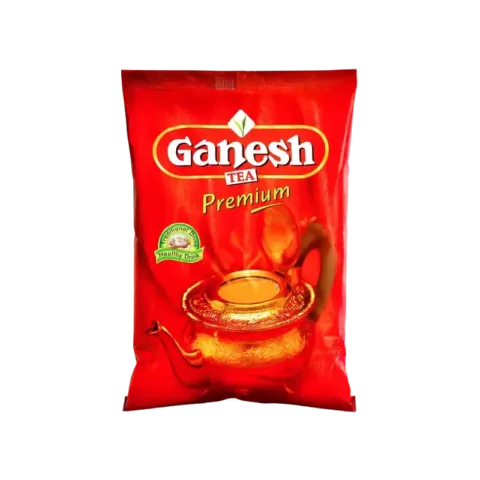
  • Ganesh Premium Tea 250g pack

    Ganesh Premium

    The flagship blend, the one on the DMart shelf. Full colour, holds its strength against milk.

    Format
    100g, 250g, 500g and 1kg
    Made for
    Kirana, supermarket, distribution
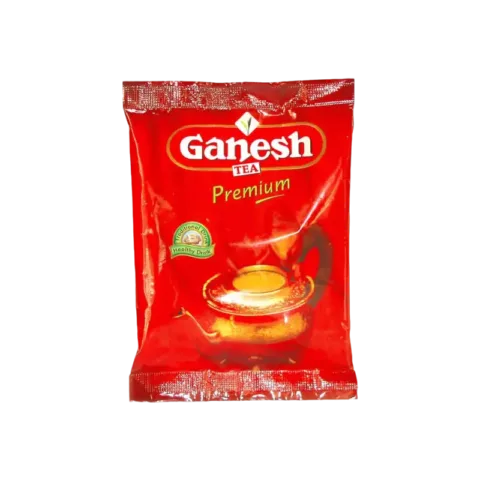
  • Ganesh Premium Tea ten rupee pack

    Premium ₹2, ₹5 and ₹10

    The same blend at a price point that moves daily. The pack that gets a first-time buyer.

    Format
    Small packs for counter sale
    Made for
    High-turnover counters and routes
  • Ganesh Special Tea pack

    Ganesh Special

    Built for a keen price without going thin. Strong, straightforward, everyday.

    Format
    Bulk and retail packs
    Made for
    Value-led retail, wider margin
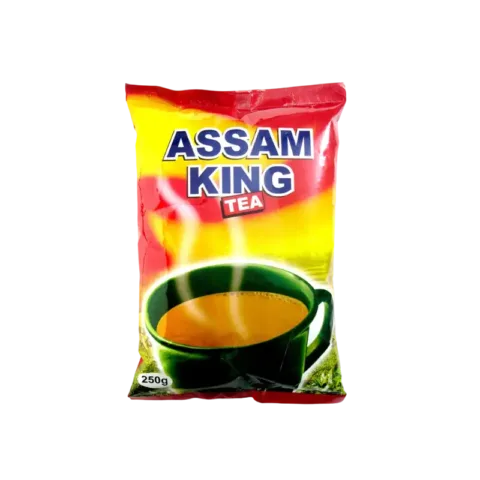
  • Ganesh Assam King Tea pack

    Assam King

    The top of the range. The maltiest of the five and the biggest aroma off the pot.

    Format
    Bulk and retail packs
    Made for
    Premium retail and gifting
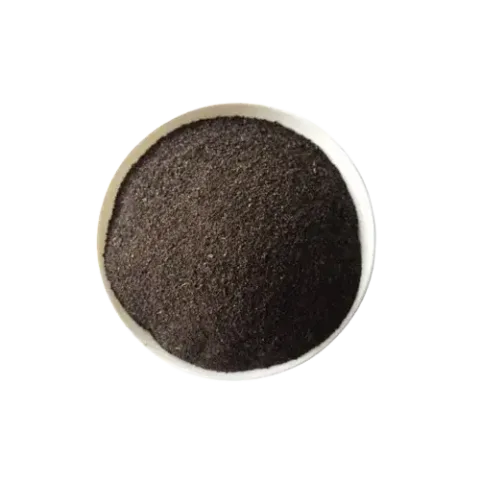
  • Ganesh Tea Hotel Dust grade

    Hotel Dust

    The finest grade, so it extracts fastest and darkest. The lowest cost per cup we make.

    Format
    Bulk
    Made for
    Hotels, restaurants, canteens, caterers

Not sure which one? Tell us what you sell and how your customers take their chai, and we will send two to cup side by side.

Quality, taste, aroma, colour

How do you judge whether a tea is any good?

Not from a description. Tea is bought by cupping it, so here are the five things a buyer should test, including the one that costs caterers their customers and that almost nobody checks before signing.

  1. Colour

    Brewed in plain water it should run deep amber and clear. With milk it should hold a full reddish brown. A thin tea turns grey once the milk goes in, and no amount of extra patti brings the colour back.

  2. Strength

    Three to four minutes at a rolling boil should be enough to get a full cup. If a tea needs five or six minutes and a heavier hand, you are paying to boil water.

  3. Briskness

    The bite at the end of the sip. Assam gives it and a flat, sweetish tea has none. It is the first thing a regular chai drinker notices and the last thing they forgive.

  4. Aroma

    Malty, the way the origin should smell coming off the pot. Not grassy, not smoky, not dusty. Aroma is the parameter a customer registers before they have tasted anything.

  5. Consistency

    Cup the January stock against the July stock. This is the one that matters most and gets tested least. A caterer does not lose an account because the chai was bad once; they lose it because it changed.

We would rather you ran those five checks than took our word for any of it.

Ask for samples

Open to

Who we supply

Every route below reaches the family on WhatsApp, not a call centre, and each one opens with your details already written so the first reply can be a useful one.

No forms, no waiting

How do I open a trade account?

Four steps, and the second one is the important one. Nobody should commit to a tea supplier before they have brewed the tea.

  1. Tell us your trade and your volume

    One WhatsApp message with what you sell, where you are and roughly how much tea moves in a month. That is enough for us to know which grades to put in front of you.

  2. Cup the samples

    We send samples of the grades that fit. Brew them against whatever you buy today, at your own dosage, with your own milk. This is the step that decides everything and it costs you nothing.

  3. We quote on grade and quantity

    Trade pricing is set per grade, pack format and quantity, which is why there is no rate card on this page. You get a number against the tea you have already tasted.

  4. First dispatch from Mumbai

    Packed and dispatched from our Mumbai operation. After that, reordering is a message, and the blend you tasted in the sample is the blend that keeps arriving.

Can I export Ganesh Tea?

Yes, and here is the honest division of labour, because a supplier who is vague about this is a supplier who has not done it.

What we supply

  • Assam CTC in bulk, in the grade you have cupped
  • FSSAI licence 11516021000874, which every consignment needs behind it
  • Our company documentation and invoicing
  • Consistent supply against a repeating order

What you hold

  • Import Export Code from DGFT, in your own name
  • Registration cum Membership Certificate from the Tea Board of India
  • Destination market compliance and labelling

Every tea exporter must hold the IEC and the Tea Board registration themselves. No supplier can export on your behalf without them, and anyone who tells you otherwise is worth walking away from.

Trade questions, answered

What is the minimum order for wholesale tea?

It depends on the grade and the pack format, so we set it per buyer rather than publishing one number. A caterer taking Hotel Dust in bulk and a shop taking 250g pouches are not the same order. Tell us your trade and your volume on WhatsApp and we will tell you the smallest sensible first order.

Can I get a sample before I order?

Yes, and you should. Tea is bought by cupping it, not by reading about it. Tell us which grades you are considering and we will send samples so you can brew them side by side against whatever you are buying now.

Can I become a Ganesh Tea distributor?

We work with distributors and super stockists across Maharashtra and we are open to new territories. Message us on WhatsApp at +91 93200 28110 with your city and the trade you already serve, and we will come back on territory, pricing and quantities.

Do you supply tea to hotels and caterers?

Yes. Hotel Dust is the grade made for it: the finest particle size of the five, so it extracts fastest, gives the deepest colour and carries the lowest cost per cup at volume. That is why hotel and canteen kitchens buy dust rather than leaf.

Do you supply tea for export?

We supply Assam CTC in bulk to exporters, along with our FSSAI licence and our documentation. The export licences are yours to hold: every tea exporter needs an Import Export Code from DGFT and a Registration cum Membership Certificate from the Tea Board of India in their own name.

Is Ganesh Tea FSSAI certified?

Yes. Ganesh Premium Tea Private Limited holds FSSAI licence 11516021000874. The tea is also stocked by DMart and Reliance Retail, both of which qualify a vendor before listing them, so that diligence has already been done by somebody with more to lose than you.

Taste it before you talk price.

One message, your trade and your volume. Samples go out, you cup them against what you buy now, and we talk numbers after that.

Ganesh Premium Tea Private Limited, Mumbai, Maharashtra. FSSAI licence 11516021000874. Family owned since 1986.